
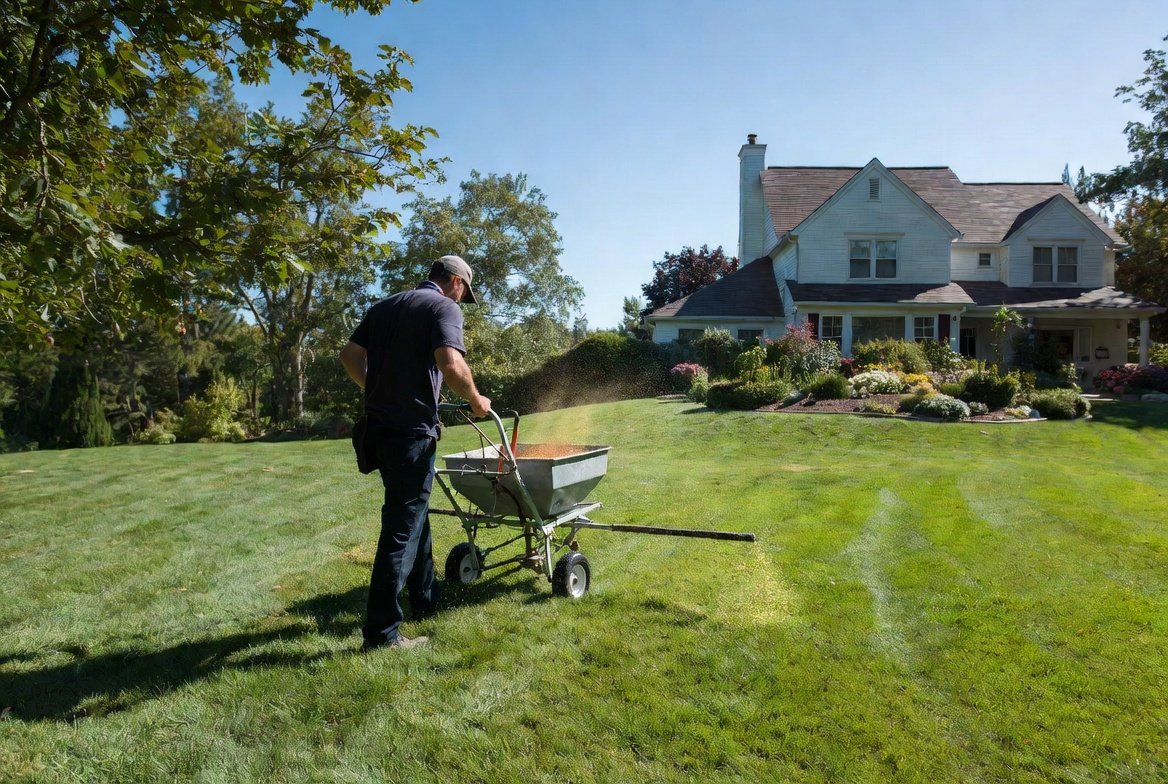
In Florida, proper lawn fertilization is essential for maintaining healthy, vibrant warm-season grasses like St. Augustine, Bahia, and Zoysia.
Spring (March–May): Apply a balanced slow-release fertilizer (such as 16-4-8) as the grass greens up to promote strong root development and early-season growth.
Summer (June–September): Use lighter applications of nitrogen or iron supplements every 6–8 weeks to sustain color and density during peak heat and humidity, while respecting local fertilizer blackout periods.
Fall (October–November): Focus on a potassium-rich fertilizer to strengthen roots and improve disease resistance ahead of cooler weather.
Winter: Generally avoid nitrogen fertilization as most grasses go dormant.
These seasonal treatments encourage thick turf that naturally crowds out weeds, improves drought tolerance, and reduces susceptibility to fungal diseases like brown patch and large patch by promoting vigorous, resilient growth. Always follow local ordinances and conduct a soil test for best results.
In Florida, proper lawn fertilization is essential for maintaining healthy, vibrant warm-season grasses like St. Augustine, Bahia, and Zoysia.
Spring (March–May): Apply a balanced slow-release fertilizer (such as 16-4-8) as the grass greens up to promote strong root development and early-season growth.
Summer (June–September): Use lighter applications of nitrogen or iron supplements every 6–8 weeks to sustain color and density during peak heat and humidity, while respecting local fertilizer blackout periods.
Fall (October–November): Focus on a potassium-rich fertilizer to strengthen roots and improve disease resistance ahead of cooler weather.
Winter: Generally avoid nitrogen fertilization as most grasses go dormant.
These seasonal treatments encourage thick turf that naturally crowds out weeds, improves drought tolerance, and reduces susceptibility to fungal diseases like brown patch and large patch by promoting vigorous, resilient growth. Always follow local ordinances and conduct a soil test for best results.